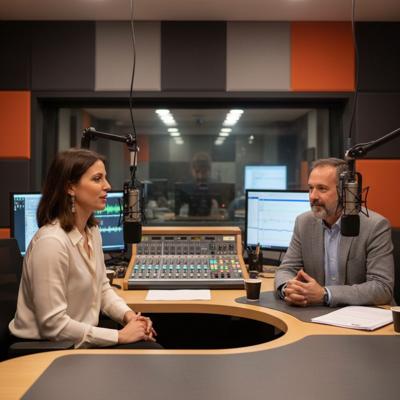
Why should lawyers engage with the media, and how should they go about it? The Brief dips its toe into the world of PR.
Public relations (PR) has many definitions but at its core is “earned” coverage in the traditional media: newspapers, magazines and, increasingly, websites that play the same role – along with appearances on TV and radio. Guest blogs and appearing as a podcast guest can, as long as no money changes hands between host and contributor, also be added to this list.
Earned media coverage involves the discretion of a journalist/editor who decides whether, and in what form, to feature you. In this it is very different from “paid” media (advertisements) and “owned” channels like your firm’s own website and social media accounts, over which you have more-or-less complete control.
The earned nature of PR coverage means it carries greater weight than other marketing channels. However, the fact you cede ultimate control to a journalist, with whose agenda your contributions need to dovetail, means it must be approached mindfully.
This can lead to understandable nervousness among professionals.
To help lawyers understand the potential benefits, and provide some tips for making the most of encounters with journalists, The Brief spoke to three law firm leaders about their approaches to working with the media.
Independent authority
Paul Britton, founder and managing director of the law firm Britton & Time, has a significant presence in both the written and broadcast media – including regular appearances on Good Morning Britain.
He says, “Lawyers often underestimate the importance of telling their story. For me, PR is about visibility and credibility.
“If you’re doing interesting work or have a perspective on issues affecting society, it makes sense to contribute to the public conversation. Media engagement allows me to explain complex legal issues in plain language and position myself as someone people can trust when those issues arise.”
Media coverage builds credibility far quicker than traditional marketing.
He also emphasises the unique benefits of earned media: “Media coverage builds credibility far quicker than traditional marketing because it carries independent authority.
“When a potential client sees that you’ve been quoted in the press or appeared on television discussing legal issues, it reassures them that you’re someone recognised in your field. It also raises the profile of the entire firm and often leads to opportunities you would never have predicted.”
Recognition and respect
Minal Backhouse, founder and CEO of Backhouse Solicitors, agrees that very little compares to media coverage when it comes to establishing authority. She says, “Other forms of marketing might help with awareness, but PR also builds credibility and positions your specialists as experts in their field.
“It’s especially key for law firms that depend on recognition and respect within their local area.”
She also points out that PR’s impact isn’t limited to establishing your credentials with clients – it also plays a major role in a firm’s employer brand and “enticing the right talent”.
AI advantage
Another argument in favour of engaging in PR is its role in maintaining online visibility.
Backhouse says, “Google has long become wise to attempts to game the system with spammy or paid links, whereas the links and mentions we earn naturally from our PR activity benefit us as much in the search engines as they do in the public perception of our company.”
Authoritative press coverage and well‑structured thought leadership content are treated as credibility signals by AI models.
Meanwhile Mat Newnham, partner and head of employment at Birketts LLP, points out the importance of earned online media mentions in what is known as “generative engine optimisation” (GEO) – ensuring your brand appears in AI search summaries and recommendations.
He says, “GEO is increasingly important in ensuring that AI‑powered search tools present accurate and authoritative information about Birketts. Good PR therefore plays a direct role in influencing how AI systems describe us.
“Authoritative press coverage and well‑structured thought leadership content are treated as credibility signals by AI models.”
Fear of being misquoted
Ruth Peters, business development director at Tier One Criminal Defence Firm Olliers Solicitors is an award-winning criminal defence lawyer, as well as leading the marketing and business development function for the firm.
We reassure our team by ensuring their technical accuracy is preserved while we handle the media-friendly framing.
She highlights a factor that often looms large in lawyers' minds: “A common hurdle is the fear of being misquoted or having complex legal points edited into something inaccurate. We reassure our team by ensuring their technical accuracy is preserved while we handle the media-friendly framing.
"Our goal is to make the process as frictionless as possible. When they see that their expertise is being respected, reported accurately and is actively future-proofing their professional reputation, that initial reluctance to engage in PR begins to melt away.“
Finding the time
While many lawyers would accept the theoretical case for engaging in PR, they might remain reluctant to take the plunge themselves. Backhouse says, “In a profession built on billable hours and meticulous technical work, PR can feel like a ‘nice-to-have’, rather than ‘must-have’ strategy.
“For these colleagues I’d emphasise the role of PR as a risk-mitigation and revenue-generation tool.
“For others, putting themselves out there can feel a little scary. In this scenario I’d reassure them that PR isn't about bragging; it’s about sharing knowledge and ideas, and keeping you and your company front of mind.”
If you know your subject and speak plainly, the media will keep coming back to you.
Britton, too, acknowledges that dealing with journalists can fall outside many lawyers’ comfort zones. He says, “If you don’t contribute your expertise to public debate, someone else will.
“Done properly, PR isn’t about self-promotion, it’s about educating the public and explaining the law. In my experience, once lawyers do their first interview, they quickly realise it’s either for them or not.
“Preparation helps, but authenticity matters more. If you know your subject and speak plainly, the media will keep coming back to you.”
Anything that threatens the billable hour, like drafting an article or prepping for a media interview, is often viewed as a distraction from the ‘real’ work.
Peters, meanwhile, says, “A lawyer’s default setting is to protect their time. Anything that threatens the billable hour, like drafting an article or prepping for a media interview, is often viewed as a distraction from the ‘real’ work. However, the paradox we face in modern practice is that being the best-kept secret in your field is no longer a sustainable business model.
“At Olliers we take time to explain to the team that PR isn't just about winning new work for the firm, but protecting the work we already have. In an increasingly competitive market our clients are being bombarded by content. If our lawyers aren't visible, we are effectively conceding the digital space to the competition."
Keep it snappy – and interesting
Although prospective media interviewees should always be well-prepared, if your firm has an in-house or outsourced PR function then they should do much of this work for you. This means, Newnham says, “PR does not require extensive amounts of time.”
He continues, “Journalists value clarity, speed and practical insight. Concise, original contributions have a strong impact and help build long‑term relationships, even where comments are not always used.”
He also raises another point, the importance of which cannot be overemphasised: “Be quick. Journalists work to tight deadlines, so responding promptly increases the chance of inclusion.”
Backhouse concurs with this, saying, “Responding to media opportunities quickly is often the difference between getting coverage or not.”
Responding to media opportunities quickly is often the difference between getting coverage or not.
Both Backhouse and Newnham also point out that when journalists ask for a lawyer’s opinion, an actual opinion is what they want – not basic background they can find for themselves.
And, most of
all, remember who you are talking to. As Britton says, “Journalists and audiences
are not lawyers [unless you’re writing for The Brief! -ed], so avoid
jargon and focus on explaining the issue in a way anyone can understand.”
Image generated using AI
Visit
Connect with Minal Backhouse via LinkedIn
Connect with Paul Britton via LinkedIn
Connect with Mat Newnham via LinkedIn
Connect with Ruth Peters via LinkedIn