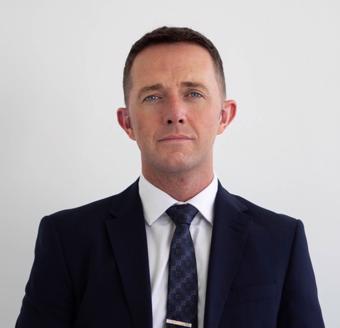
Sarah Walton
Managing Partner at Weightmans LLP
Weightmans LLP’s first female managing partner tells The Brief about her firm’s plans to become a top 30 practice, the impact of private equity on the legal sector and her passion for social mobility.
In April 2025 Sarah Walton became the first ever female managing partner at Weightmans LLP, a firm whose history dates back almost 200 years.
Historically an insurance-led practice with its roots in Liverpool, Weightmans is now a full-service national commercial firm employing 1,700 people across ten offices around the UK. Approximately 70 per cent of its business is now made up of Regulatory, Litigation, Transaction and Advisory work, and last year the firm generated around £10 million in revenue from international work.
The firm is on target to hit turnover of £160 million in its current financial year, and it is ranked number 43 in the UK top 200 law firms. “Our overriding target is to become a top 30 law firm,” Walton tells The Brief.
We can’t rest on our laurels, take anything for granted or become complacent – we have to be continually driving growth.
“To achieve that we need to maintain our growth mindset. We can’t rest on our laurels, take anything for granted or become complacent – we have to be continually driving growth.”
In pursuit of its growth target, the firm is focusing on four strategic priorities: culture and people; technology; operational excellence; and brand and market positioning.
“On top of that we also want to be one of the UK’s most sustainable law firms. We are already in the top five per cent, with an EcoVadis gold ranking,” she says
Private equity impact
“It’s a really exciting time for Weightmans and the profession as a whole,” Walton says. “We have huge, huge opportunities and the legal sector is going to change so much in the next five years.
“I don’t think we have ever seen anything like the transformation the sector is likely to experience. It won’t just be the impact of technology but also of private equity coming in.”
In recent years private equity investors have been highly active in the accountancy sector. Having worked through many of the best opportunities in that industry, they are now turning their attention to law firms.
The pace of investment into the legal sector has not, though, been as rapid as Walton initially expected: “There has been a lot of activity in firms ranked 50-100 but private equity has not yet started to focus on the big beasts in the UK legal sector. Firms like us are probably a bit too big.”
I’m not sure we are going to see the same influx of private equity that there has been in the accountancy world but it’s definitely having an impact.
As a corporate lawyer she also understands better than most that the decision to take on private equity investment is not one to be made lightly because, as she explains, “Once you have taken it you’re never getting out of that cycle.
“However, what it is doing is causing firms like ours to look at the way we operate and run our businesses. If private equity were to come in they would look at all kinds of value creation, so we are applying that same mindset to ourselves, asking what we can do better, where the opportunities to create value lie and how we achieve that.”
There will also, Walton says, inevitably be an increase in mergers and acquisitions in the legal market. “Firms are saying, ‘We don’t want private equity money but we want to keep growing,’” she explains.
“So private equity is impacting in different ways. I’m not sure we are going to see the same influx of private equity that there has been in the accountancy world but it’s definitely having an impact.”
Management and governance
One tangible way firms like Weightmans are becoming more “corporate” is in their management and governance.
The managing partner position occupied by Walton is held on a three-year basis, renewable twice up to a maximum total term of nine years. There is no CEO above her and the firm’s senior partner is steward of the firm’s values, reputation and long‑term interests, so Walton is “top of the tree.”
A corporate lawyer, she has not practised since joining Weightmans’ board in 2023 as client relationships director. “If clients have strategic things they want to discuss with me then I’m always at the end of the phone but I also have to be realistic,” she says.
“I’m leading a £160 million business with 1,700 staff and, with the best will in the world, you can’t do justice to that and also run transactions for clients.
“It’s me that sets the strategy and direction for the firm, it’s me who decides what our values and our priorities should be, and it’s my responsibility to create the conditions that our people and clients need.”
Quite a lot of my board of directors are not lawyers. That’s quite novel in law firms.
Walton works alongside the firm’s 11-strong board which includes a finance director, a human resources director, the individual directors of each of the firm’s three operation divisions, and two non-executive directors.
“A lot of law firms don’t have non-execs but I have two – one with a background in insurance and one in media and publishing. They help to challenge us and hold us to account, to make sure we’re delivering on the firm’s strategy and not coasting or getting bogged down in the minutiae,” she explains.
“Quite a lot of my board of directors are not lawyers. That’s quite novel in law firms.”
Diversity, inclusion and social mobility
As well as growing the firm, Walton is passionate about promoting diversity, inclusion and social mobility in the firm and across the profession. The firm recently achieved its highest ever score in the Social Mobility Foundation’s rankings and has been shortlisted in the large organisation category of the 2026 Northern Power Women Awards.
“For me, being managing partner, and certainly being the first female to hold this role, is a real privilege and honour,” she says. “It’s also an opportunity because it shows what people from underrepresented or underprivileged backgrounds can do.
“They don’t need to have gone to a Russell Group university. They don’t need to be a white male of a certain age.”
Walton grew up in a “very working class” family in Yorkshire and was encouraged by her grandfather, a retired police officer, to consider a career in the law.
She secured a place at Nottingham Trent University which was, at the time, one of just a handful of law schools to offer a four-year course including a placement year. Walton says, “I chose that route deliberately because I thought if I experienced life in a law firm I would know if I wanted to be a lawyer or not.”
Her placement, at a high street firm in Preston that focused primarily on criminal work, taught her that she did indeed want to become a lawyer – but not in criminal practice. Armed with this knowledge she secured a training contract at the commercial firm Mace & Jones.
Those were the days when you did three-day completions and stayed up all night living off takeaways.
Her second seat was in corporate and, “I just felt at home. I loved the pace of corporate work, the deals and the energy.
“Those were the days when you did three-day completions and stayed up all night living off takeaways.”
As well as the energy and organisation involved in corporate, it also appealed to her curiosity. She explains, “As a corporate lawyer you need to know about pensions, real estate, regulatory, competition – you get to know a fair amount about a lot of things, and it also involves collaborating with a lot of different people.”
Management career trajectory
Walton made partner at Mace & Jones at the age of 30, a position she retained when the firm merged with Weightmans in 2011. The next big change came in 2017, following the birth of her daughter, when she took on an operational management role overseeing the corporate, commercial and private client practices, in tandem with her corporate practice.
Then, after a couple of years in role, she was encouraged to apply for equity partnership, which she achieved at the first time of asking. This quickly led to a position on the firm’s remuneration committee, a business development role and, ultimately, the job of client relationships director.
This, she says, gave her a “360-degree holistic view of the whole firm in a way that no-one else had”, and which made her the best fit for the managing partner role.
Paying it forward
Although she believed she was the best person for the job, she also credits the fact she applied for it, and for the other roles that led to it, to “sponsors” within the firm. “They have been really important,” she says.
“Particularly as a woman, we tend to have imposter syndrome massively, and we don’t go for jobs because we don’t think we can tick all the boxes.
“So it makes such a difference to have people within the organisation demonstrating that they have confidence in you and saying, ‘I think you should go for this – I think you can do it.’”
Her focus now is on paying this forward, championing diversity and inclusion.
The legacy I want to leave is to make sure we’re at the forefront in terms of social mobility.
Although law firms like Weightmans are making strides in terms of social mobility, including by opening up new apprenticeship routes into the profession, Walton acknowledges that headwinds also exist.
These range from the level of university fees and the removal of maintenance grants to the recent Mazur case which restricted the role paralegals and Chartered legal executives can play in litigation – something she says has been “so disruptive to the profession, and access to the profession.”
She concludes, “The legacy I want to leave is to make sure we’re at the forefront in terms of social mobility, access to the profession, and showing what people from underrepresented backgrounds and groups can do.
“I’ve got to make sure that I’m not the last person like me to hold this role, because that would be tragic.”
Visit
Connect with Sarah Walton via LinkedIn